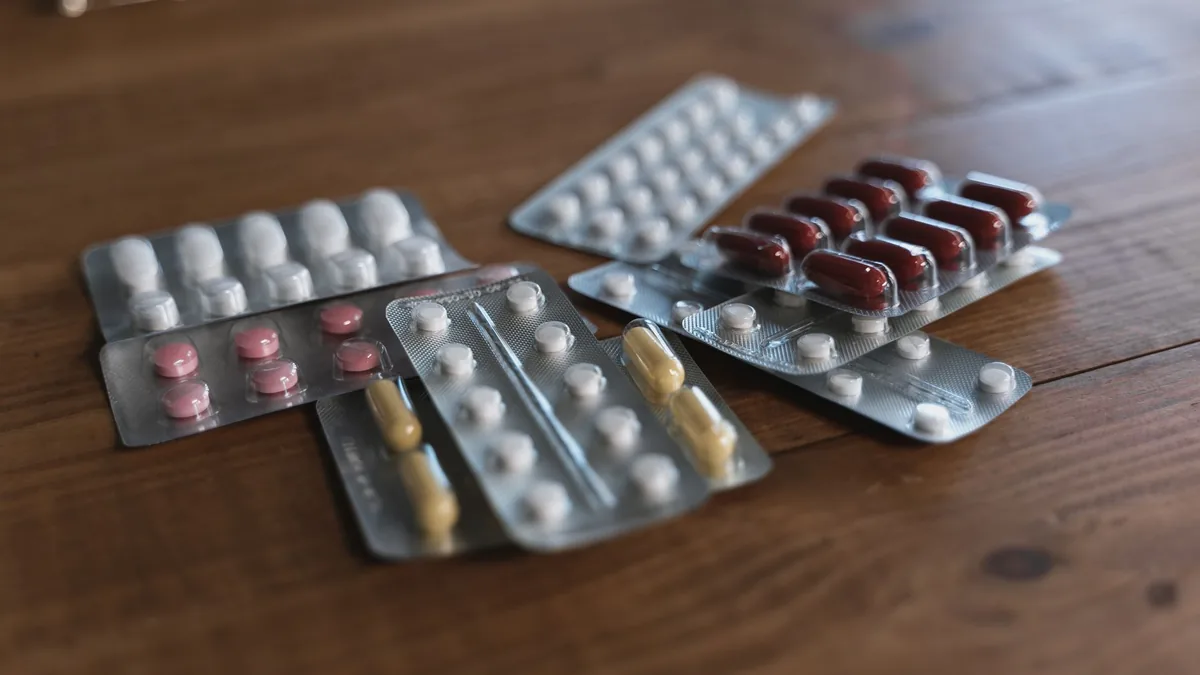
What the new oral semaglutide weight loss trial is testing
The registration for NCT07770841, posted to ClinicalTrials.gov and carrying an August 18, 2026 record date, lists Novo Nordisk A/S as sponsor, a Phase 3 designation, a planned enrollment of about 450 participants, and a status of recruiting. Participants are adults with excess body weight. The comparison is against placebo tablets — described in the registry's plain-language summary as dummy tablets that look identical but have no active effect.
What separates this entry from the many semaglutide studies already on the registry is its stated objective. Rather than confirming a strength that has already been settled on, the listing says the study is meant to see how oral semaglutide works at lower strengths and to help select the most suitable one for treating people with overweight or obesity. That is dose-selection work being run at Phase 3 scale.
The registry entry does not publish endpoints in the level of detail a journal article would, and it contains no results. Body weight change is the outcome the summary points to. Everything else — how the doses compare with one another, how tolerability differs across them, how long participants are followed — belongs to the protocol and to whatever publication eventually follows.
Why a lower-dose semaglutide tablet is worth watching
Semaglutide is a GLP-1 receptor agonist, a class of drugs that mimics a gut hormone involved in insulin release and appetite signaling. Most people tracking it use an injectable form. Tablets are a harder engineering problem: peptides are broken down in the digestive tract, so oral versions have historically had to deliver considerably more active ingredient than an injection to achieve comparable exposure in the blood.
That is the backdrop for a study whose entire purpose is to find out how far the oral dose can be pulled down while still producing weight loss. Novo Nordisk's registry summary does not explain its reasoning, and it would be speculation to assign one. But the question the trial asks — what is the lowest tablet strength that still works — is the question that determines whether a pill is a niche alternative or a mainstream one.
For readers already on an injectable GLP-1, none of this changes anything today. A recruiting Phase 3 study is several years and at least one regulatory review away from altering what a prescriber can write. It is a signal about where the category is heading, not a change in what is available.
If your current protocol is injectable and involves drawing from a vial, the semaglutide dosage calculator handles the unit conversions that a tablet regimen would eliminate.
The Japanese formulation comparison tested a tablet the sponsor calls oral semaglutide D against the approved oral product in 267 people with type 2 diabetes over about 27 weeks. the Japanese formulation comparison.
Two oral semaglutide Phase 3 studies now listed as completed
The same registry sweep shows NCT05132088, a Novo Nordisk Phase 3 study of semaglutide tablets in 201 participants of East Asian background living with overweight or obesity, moved to a completed status with an August 14, 2026 record date. Its design, as described in the listing, ran 68 weeks with participants randomly assigned to semaglutide tablets or placebo tablets, alongside counseling on food choices and physical activity.
The listing also describes the study's practical shape in unusual detail for a registry entry: roughly a year and a half of participation, 14 clinic visits and 7 phone calls with study staff. That is a reminder of how much structured contact sits behind the numbers that eventually appear in a results paper — and how different a supervised trial regimen is from an unsupervised one.
Separately, NCT07271251, a Phase 3 study in 267 Japanese participants with type 2 diabetes, is also listed as completed. It ran approximately 27 weeks and compared a new tablet formulation against the already approved oral semaglutide, with assignment decided at random. The registry frames the question as whether the two are equally safe and effective for lowering blood sugar.
Dose-selection studies like this one sit upstream of the schedules prescribers use in practice, and our glossary entry on what titration means explains how those step-ups are normally structured.
What is oral semaglutide D?
The Japanese study names the experimental arm oral semaglutide D and the control arm oral semaglutide, the approved product. In regulatory terms this is a formulation comparison rather than a new-molecule study: the active ingredient is the same semaglutide, and the question is whether a reworked tablet behaves like the one already on the market. Studies of this shape typically underpin a manufacturing or presentation change rather than a new indication.
A similar lettering convention shows up elsewhere in the sponsor's pipeline. NCT07605052, a Phase 1 study listed as active and not recruiting with 50 participants living with excess body weight, compares blood levels of two versions of cagrilintide — an amylin analog Novo Nordisk has been developing alongside semaglutide — labeled cagrilintide B and cagrilintide D over about 14 weeks.
Neither listing explains what distinguishes the lettered versions, and the registry is not the place that answer will come from. It will appear, if at all, in a pharmacokinetics publication or a regulatory filing.
A daily oral regimen generates far more log entries than a weekly injection, which is why adherence tracking becomes a meaningful metric rather than an afterthought.
How to read a registry posting versus a published trial
ClinicalTrials.gov entries are submitted and maintained by the study sponsor. They are a public record of what a trial intends to do, who is running it, how many people it plans to enroll, and where it stands. They are not peer reviewed, they are not journal articles, and a status change to completed says only that the study finished its planned activity — not that it succeeded.
This matters because registry updates now circulate quickly through secondary coverage, where a completion date can be reported in language that sounds like a result. Until results are posted to the registry's results database or published in a journal, the honest reading of these three entries is that one dose-finding study has opened and two others have finished collecting data.
The same caution applies in reverse. A recruiting status does not mean a trial will report; studies are terminated, redesigned, and merged. Enrollment figures listed in a registry are targets, and the final number in a publication is often different.
The Phase 3 registry listing states that Novo Nordisk is recruiting roughly 450 adults with excess body weight to compare lower strengths of oral semaglutide against placebo tablets. the Phase 3 registry listing.
What happens next
The two completed studies are the ones to watch over the coming months. Sponsors are generally expected to post summary results to the registry within a defined window after a study's primary completion date, and Novo Nordisk has historically also published its Phase 3 semaglutide programs in clinical journals. Either route would put actual numbers behind the East Asian obesity study and the Japanese formulation comparison.
The new lower-dose weight-loss study is on a much longer clock. A Phase 3 trial that is still recruiting has not finished enrolling, let alone treating and following its participants. Nothing about the tablet strengths it is testing should be read as approved, available, or recommended, and the registry entry makes no efficacy claim of any kind.
The completed East Asian obesity study enrolled 201 participants and ran 68 weeks with semaglutide tablets or placebo alongside diet and activity counseling. the completed East Asian obesity study.